Flying Time Blind
Or, How to Succeed When You Can't See Where You're Going

I’m not a pilot but for a time I had an office in a regional airport.
During this immersion in pilot culture (and eau de jet fuel) I learned a thing or two about aviation.
For example, there are two sets of regulations governing the operation of civil aviation aircraft. One is Visual Flight Rules (VFR) and the other is Instrument Flight Rules (IFR).
Flying “VFR” means the pilot flies in weather that allows them to see where the aircraft is going, specifically with visual reference to the ground and by visually avoiding obstructions and other aircraft. When pilots first get their license they are typically qualified to fly VFR only, meaning they can only fly when they can actually see where they are going.
To fly “IFR” requires additional training leading to an Instrument Rating. Under IFR, the pilot flies based on what instruments in the flight deck are telling them and navigates based on electronic signals. Pilots of private jets must be able to fly IFR because at 41,000 feet all they can see out the window is clouds and sky.
For some of us, the experience of navigating toward goals, especially long term goals, is all clouds and sky, all the time.
We’re always flying blind. Specifically, time blind.
Time blindness is a condition where your perception of time is—skewed.
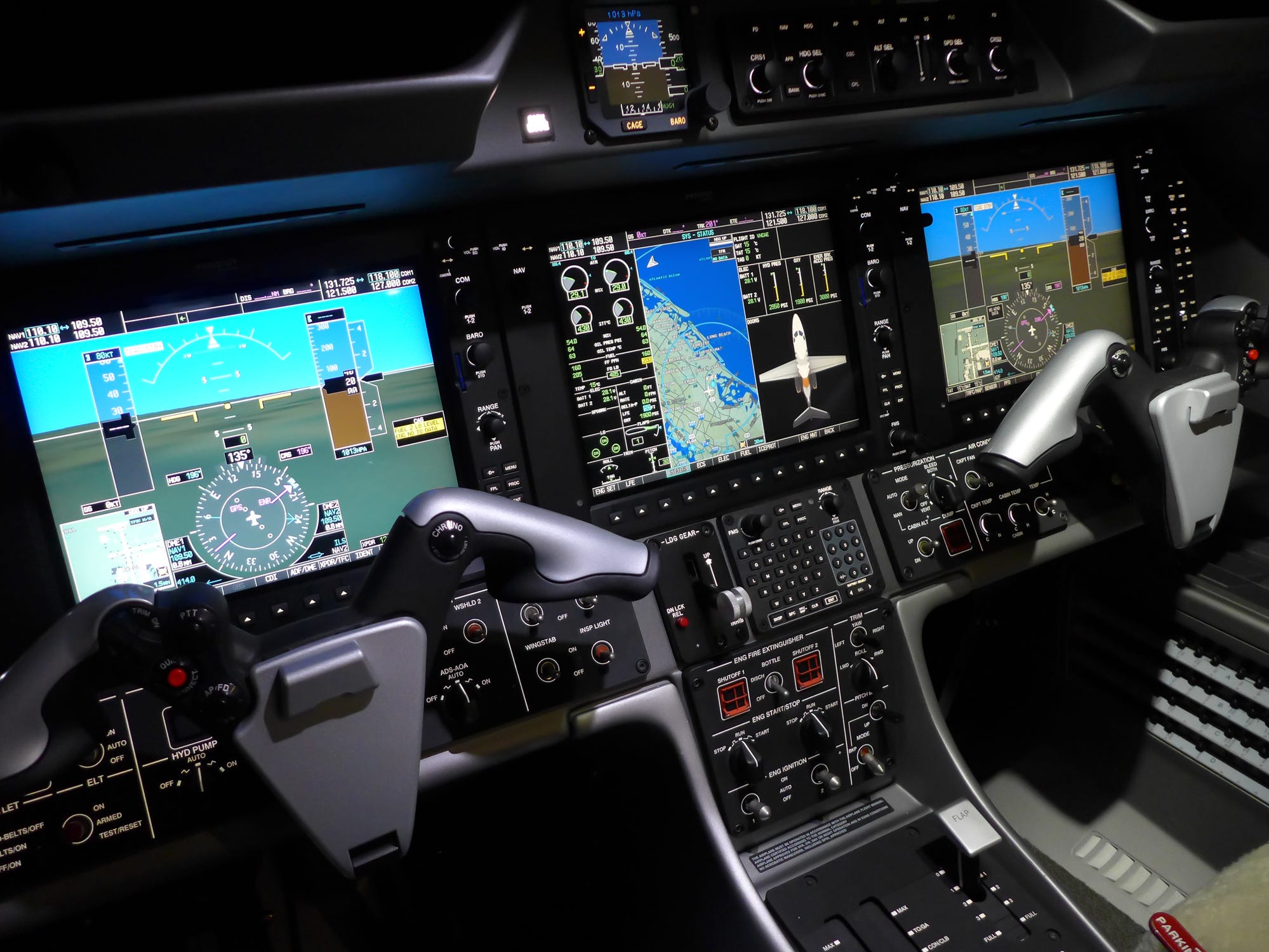
ID 35507461 | Instruments Private Jet © Zandphoto | Dreamstime.com
You’ve experienced this warpage of time if you’ve ever entered into a state of what psychologist Mihaly Csikszentmihalyi (Chick-sent-me-hi) called Flow. Flow is about fully occupying the present moment while you’re involved in something, which leaves you satisfied and energized at its conclusion.
Flow’s evil twin is Hyperfocus, which left unchecked can lead to a lot of narrow, repetitive (and unhealthy) activities, where you become blind to amount of time that has passed. For me, scrolling social media on my phone instantly induces a state of hyperfocus. (I never feel good after I emerge from a bout of hyperfocus.)
Interestingly, most of the writing I’ve seen around time blindness seems to focus on shorter term relationships with time. The missed appointment, the forgotten phone call, the blown work deadline, etc.
Doesn’t it just make sense, though, that time blindness would also include difficulty seeing a clear path to the future?
For example, when I conceive of a goal and draft a five-year plan to achieve it, my brain literally cannot tell me what “five years” means. In fact, my brain understands life about 16 waking hours at a time, max.
For me, the inability to grok time, means all time—long and short. And that is where the aviation analogy comes into play.
I realized that to achieve anything big, I had to start flying IFR.
For me, that means creating a detailed “flight plan” and navigating from point A to B to C, etc. and course correcting as needed based not on how I think I’m doing that day but rather on what my instruments are telling me.
I’ll give you an example.
Like most women of my vintage, my metabolism has slowed down and so the pounds go on faster and come off more slowly than they used to.
I used to be able to fly my fitness goals VFR, meaning go to the gym “more” (whatever that was) and maybe cut out bread and pasta for a month or so to ditch the extra fluff. That worked, until it didn’t.
Thanks to social media, I recently discovered Xtine Cardenas, a gifted and no BS personal trainer based in Canada. (FD: I belong to her community but am not a direct client.) In one of her videos, she mentions how she was on the FAFO weight loss plan until she realized to lose weight she needed to be in a calorie deficit. (Me: Oh. Ah. OK.)
So, how does one achieve a calorie deficit? Well, you do some algebra based on your current weight, your goal and timeframe and you come up with a number that represents a calorie deficit. Mine is 1477. Then you have a couple daily metrics to hit in terms of consumption of fat, protein, and carbs.
That’s my flight plan.
My instrument panels are Snap Calorie, a calorie tracker and veSync, an app which pairs with my smart scale. I also have access to an InBody machine at my gym. The InBody is more accurate, but the veSync tells me my weight and where I’m getting better or worse vis-a-vis body fat, BMR, visceral fat, subcutaneous fat, etc.
I know as long as I am loading in good (read: honest) data consistently, my calorie instrument will let me know how I’m doing with my allotment so I can adjust my decisions accordingly. Then, my scale instrument will let me know where I’m at so I know how much further I have left to go. If I’m consistent with it I know I will get to my destination in time, which is to be down 20 pounds by January 25, 2026. (I know there’s an exercise component to this too, but for the sake of simplicity…)
Do I have any sense of how much time 15 more weeks is? Absolutely not. All I know is what happened today and I only know that because of my instruments (tracker and scale).
Pilots will tell you the hardest part about learning to fly IFR is to override your natural instincts and the resulting perceptions and put your total faith in the instruments. The minute you stop believing and responding to that information and revert to relying only your instincts, all is lost.
The flaw in this metaphor, of course, is that if I make a mistake (or five) I’m in no danger of dying or taking others with me. Same with using this approach to achieve some longer term business goals. Though, failure in either area could have more serious consequences longer term.
Hence my need to have a way to move consistently forward toward my goals—without being derailed by my brain’s “future deficit disorder.”
Anyone else out there dealing with time blindness? Would love to know your thoughts.
Fantastic read!